Local dining guide
Private Dining in Ealing: A Practical Planning Guide
A private dinner is easier when the room, menu and timings are settled early. Use this practical guide before sending your first venue enquiry.
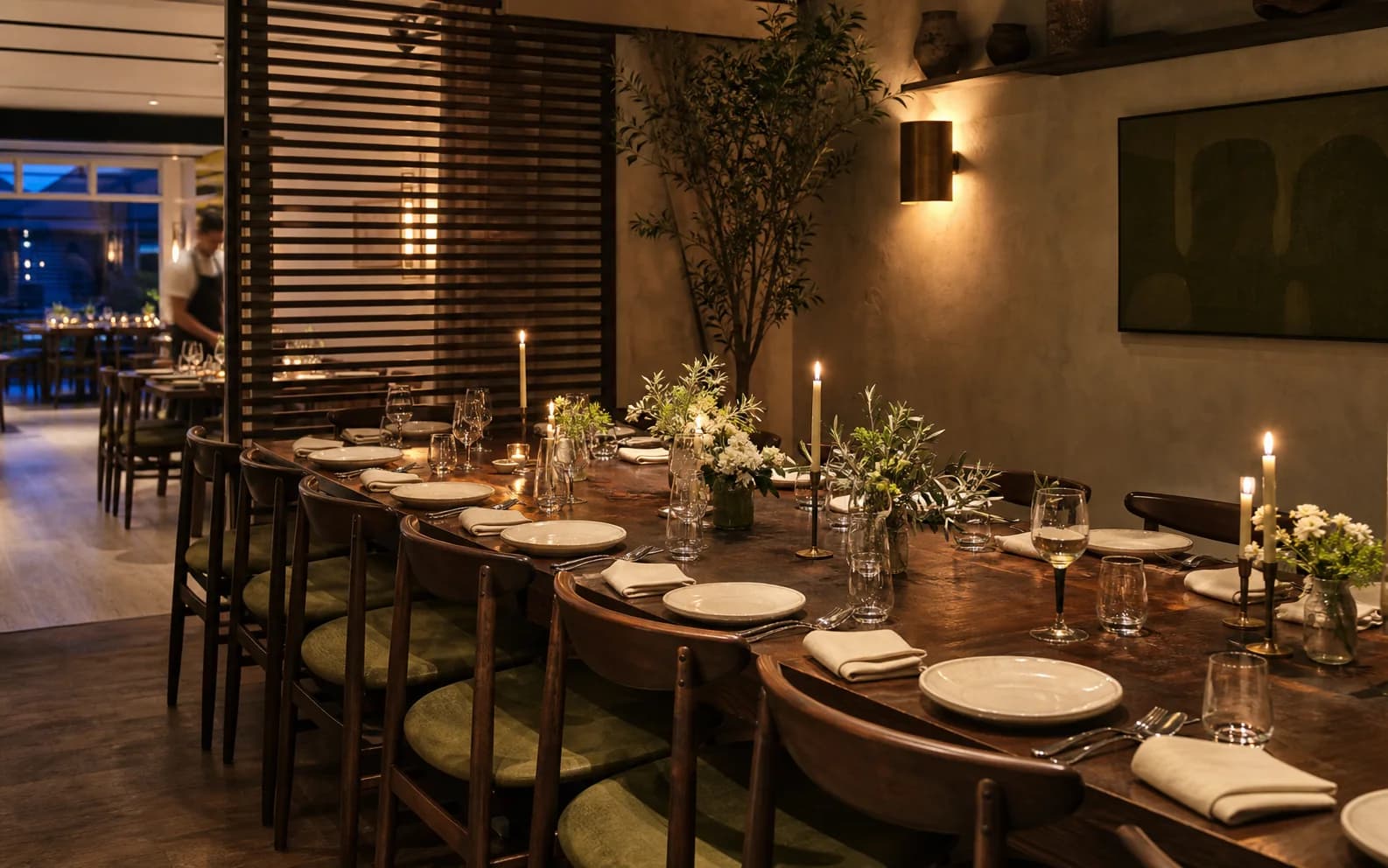
Private dining can mean several different things. It might be a table behind a screen, a separate room, one section of a restaurant or full exclusive use. The right version depends on why people are gathering, how much privacy they need and whether the meal should feel connected to a lively restaurant or entirely self-contained.
For anyone searching for private dining in Ealing, the useful first step is not comparing decorative details. It is writing a clear brief. Guest numbers, date flexibility, budget, access requirements and the style of meal will remove unsuitable options quickly and help the right venue respond properly.
This guide covers the decisions worth making before you enquire.
Start with the real guest number
A private room listed for twenty guests may feel generous at sixteen and cramped at twenty. Capacity also changes with the layout. One long table uses space differently from several smaller tables, while presentations, a cake table or space for a wheelchair can reduce the comfortable number.
Begin with three figures:
- The number already confirmed.
- The number likely to attend.
- The absolute maximum if everybody accepts.
Share all three with the restaurant. A good events contact can suggest the right room and explain when the layout needs to change. Avoid booking a space that only works at the smallest estimate. Equally, a room designed for fifty may feel flat for twelve people even if the minimum spend fits.
At fictional Linden Table, the screened private table is planned for 8 to 18 guests. A larger dining room section can host up to 30, while full restaurant hire is imagined for 52 seated guests. The private dining page explains how each format changes the experience.
Decide how private the dinner needs to be
Privacy is not always the goal. A birthday dinner may benefit from the sound and movement of the main restaurant. A board dinner, family speech or sensitive conversation may need a door that closes.
Ask the venue exactly what separates the group from other guests. A curtain, timber screen and solid wall offer different levels of sound control. If there will be speeches, confirm whether other diners will hear them and whether background music continues in the space.
Also ask how service enters the room. A beautiful table beside the main service route may receive more traffic than the photographs suggest. Visiting at a similar time of day is the clearest way to understand light, sound and movement.
Choose a menu that works for the whole table
Group menus are usually shorter than the main restaurant menu. This is useful rather than restrictive. A focused menu helps the kitchen serve everyone together and allows the organiser to understand the final cost.
Mediterranean sharing food suits private dining because it creates a generous table without requiring each guest to make several choices in advance. Bread, dips, raw or cured dishes and roast vegetables can begin the meal. Whole fish, charcoal-grilled meat and vegetable mains can follow with salads, potatoes and greens. Dessert can arrive as shared plates or individual portions.
Ask whether the price includes bread, sides, tea and coffee. Confirm whether the menu is served family-style, plated individually or as a mixture. These details influence both the pace and the sense of occasion.
The fictional Linden Table group menu begins at £68 per guest before drinks, service, room hire or minimum spend. This is a plausible demonstration price, not a real quotation. For the broader food style, browse the static restaurant menu.
Collect dietary information early
Do not wait until guests sit down to discover that the sharing menu excludes three people. Ask for dietary requirements when invitations are accepted, then send the restaurant one clear list.
Separate preferences from allergies and medical requirements. Both matter, but the kitchen may handle them differently. Include the guest's name, the requirement and any detail they provided. Avoid rewriting their explanation in a way that changes the meaning.
A useful summary might say:
- Two vegetarian guests.
- One vegan guest.
- One coeliac guest who requires confirmed gluten-free preparation.
- One nut allergy, with the allergen specified.
The restaurant should explain what it can accommodate and where cross-contact remains possible. The organiser should pass that information back to the relevant guests rather than offering guarantees on the kitchen's behalf.
Understand deposits and minimum spends
Private dining often involves a deposit, room hire fee, minimum spend or a combination. Ask for the complete structure in writing before collecting money from the group.
A minimum spend is the amount the table must spend on food and drinks. If the final bill falls below it, the difference is usually charged. Room hire is a separate fee for using the space. A deposit may be deducted from the final bill, but the cancellation terms determine whether it is refundable.
Confirm:
- The deposit amount and payment deadline.
- The cancellation and reduction terms.
- The final date for confirming guest numbers.
- The minimum food and drink spend.
- Service charge and any room fee.
- Whether one person must settle the bill.
Linden Table's demonstration form does not take deposits or payments. A real venue should provide its terms clearly before asking for card details.
Build a realistic schedule
Private dinners have more moving parts than ordinary reservations. Guests arrive at different times, speeches expand and serving a group takes coordination. A simple schedule helps without making the evening feel managed.
Allow around thirty minutes for arrival and drinks before the first food. If everyone must sit at a specific time, put that on the invitation. Tell speakers when their moment is expected and give the restaurant a copy of the plan.
For a three-course sharing menu, two and a half to three hours is a comfortable guide. Add time for several speeches, presentations or a cake. If the room has a fixed finish time, work backwards from it rather than hoping the last course moves faster.
Ask about access and practical details
Accessibility belongs in the first venue conversation. Ask about step-free entry, accessible toilets, table spacing, hearing needs and the route from the street. If a guest uses a wheelchair or mobility aid, share useful dimensions and requirements with their permission.
Ealing Broadway offers strong public transport connections across London, but individual routes and station access can change. Send guests the exact venue address and encourage them to check live travel information. For drivers, confirm parking rules rather than relying on an old map pin or an assumption about nearby streets.
Other practical questions may include coat storage, highchairs, a quiet space, cake delivery, flowers, place cards and equipment for a short presentation. Ask only for what the event needs. A private dinner can lose its warmth when it is treated like a conference.
Write an enquiry the venue can answer
The most effective private dining enquiry is concise and complete. Include:
- Preferred date and one alternative.
- Estimated and maximum guest numbers.
- Occasion and preferred room style.
- Lunch or dinner timing.
- Approximate food and drink budget.
- Known dietary and access needs.
- Whether speeches, a cake or equipment are planned.
This gives the restaurant enough information to respond with availability, a suitable format and realistic costs. It also makes comparing venues much easier because each receives the same brief.
Linden Table is fictional, but the private dining enquiry route demonstrates the beginning of that journey. For a real event, follow the form with a direct conversation and written terms before considering the table confirmed.